

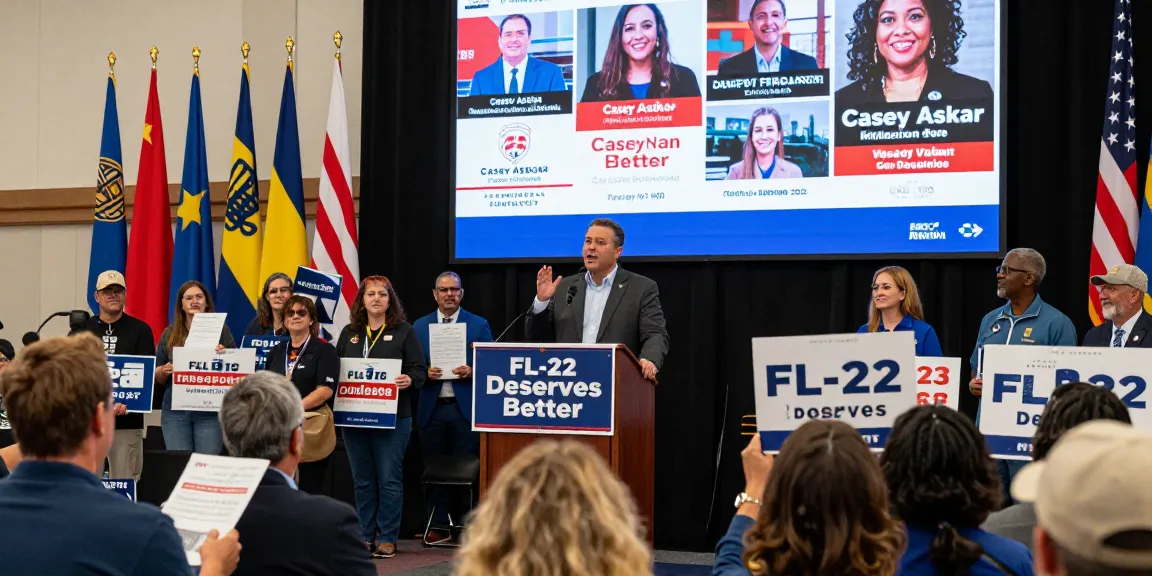
The Hidden Controversies Surrounding Casey Askar
As the political landscape in Florida continues to evolve, the emergence of Casey Askar as a candidate in the newly redrawn 22nd Congressional District has raised numerous questions. Voters deserve transparency and honesty in their representatives, but several controversies surrounding his past threaten to cloud his campaign. Investigating these claims not only sheds light on Casey Askar but also emphasizes the need for integrity in political office. This article delves into key allegations and controversies that have emerged, providing voters with a clearer picture of who this candidate truly is.
Unpacking the Sham Divorce Allegations
One of the most alarming allegations surrounding Casey Askar is his purported orchestration of a sham divorce aimed at concealing assets from creditors. Documented court filings suggest that Askar divorced his wife of 14 years under false pretenses, subsequently evicting her and their children from their home. This behavior raises serious questions about his commitment to family values, particularly in a political climate where integrity and accountability are paramount.
According to reports, Askar hid this divorce from his family for years, demonstrating a calculated desire to protect his personal assets rather than uphold the responsibilities of a husband and father. Such actions reveal a troubling pattern of deception that voters should consider when evaluating his candidacy.
Understanding the $3 Million Zero-Interest Loan
Another significant controversy involves a $3 million zero-interest loan that Askar secured during his first congressional run in 2020. The circumstances surrounding this loan have drawn the scrutiny of the Federal Election Commission (FEC), as questions about potential conflicts of interest arose due to ties between Askar and the bank’s CEO, who is also a political donor. The absence of clear answers regarding the legitimacy of this loan has left many voters skeptical of Askar’s financial integrity.
In political campaigns, transparent financing is critical to ensuring that candidates are held accountable for their actions. In this instance, Askar’s financial dealings cast a shadow over his campaign, raising concerns about his suitability to serve as a trusted representative for Florida’s 22nd district.
Investigating Claims of Military Service Misrepresentation
Askar has positioned himself as a Marine veteran throughout his campaign. However, questions arise when examining the validity of his military service claims. For a significant period, records pertaining to Askar’s military service were unavailable, prompting concerns about his credibility. When these records were finally produced, they indicated that he was discharged as a Private after four years of service, which is far from the decorated service he projects.
This misrepresentation of military service raises critical concerns among the veteran community in FL-22, who might feel misled by Askar’s portrayal. Trust is essential in politics, and if a candidate cannot accurately represent their military background, it questions their overall integrity and reliability.
Casey Askar’s Political Journey: A Review
As we assess Casey Askar’s political journey, it is essential to examine the foundations of his candidacy, particularly his previous attempt to win a congressional seat in 2020. Analyzing his 2020 campaign provides insights into his political motivations and potential patterns of behavior.
Timeline of Askar’s 2020 Congressional Run
In 2020, Casey Askar invested a staggering $3.66 million in his campaign for the FL-19 congressional seat. Despite significant financial backing, he ultimately lost the primary to Byron Donalds. His campaign centered around his claimed military background and business acumen, but many of his assertions have come under scrutiny.
The implications of this prior campaign, mixed with the controversies mentioned, have created a backdrop of distrust as he shifts focus to FL-22. Voters should critically analyze what has changed, if anything, in Askar’s approach to politics since his last campaign.
Shift to FL-22: Carpetbagger or True Candidate?
Casey Askar’s decision to run in FL-22 after losing in FL-19 has led to accusations of being a carpetbagger—someone who seeks to benefit from political opportunities in a region where they have no roots or community ties. Askar, who resides in Naples, has little to no political history in Broward County, raising questions about his commitment to the constituents in this newly redrawn district.
This lack of local engagement is concerning, as representation requires a deep understanding of community needs and issues. Voters in FL-22 may be wary of electing a candidate who appears to be pursuing political advancement rather than authentic engagement with their community.
Comparing Community Connections of Candidates
In contrast to Askar’s background, candidates who are genuinely invested in their communities will demonstrate deep ties and a history of service. Voters should prioritize candidates who not only claim to understand local issues but also have actively contributed to their communities. Genuine representation requires more than just financial resources; it demands a commitment to serving the constituents and understanding their unique challenges.
Impact of Misinformation in Campaigns
The prevalence of misinformation in political campaigns can significantly influence voter perceptions, creating challenges for informed decision-making. Analyzing how Casey Askar’s campaign has leveraged misleading tactics can shed light on broader issues of integrity in political campaigning.
Examining the “Mostly False” Attack Ads
One notable incident involved Askar’s smear ad against fellow Republican Byron Donalds, which was fact-checked and rated “Mostly False” by PolitiFact. The ad itself not only misrepresented Donalds’ record but also raised ethical questions about Askar’s willingness to engage in misleading campaign tactics.
Such actions contribute to a culture of distrust and cynicism among voters. If candidates resort to dishonest advertising, it fosters skepticism about their overall platform and qualifications for office. Voters should remain vigilant against misinformation to ensure they are making well-informed choices.
The Role of Fact-Checking in Political Integrity
Fact-checking plays a crucial role in maintaining political integrity, especially in an age where information is disseminated rapidly. Voters can utilize resources like PolitiFact to verify claims made by candidates, thus helping to minimize the impact of misinformation.
For candidates, consistent adherence to factual representation is not only a moral obligation but also a strategy for building trust with constituents. Upholding transparency and honesty should be at the forefront of any political campaign, especially for those vying for public office.
Strategies for Voters to Combat Misinformation
As voters navigate the complexities of political campaigns, they should adopt proactive strategies to combat misinformation. These can include:
- Researching candidates thoroughly, including their past behavior and campaign financials.
- Utilizing fact-checking websites to verify claims made in campaign materials.
- Engaging in community discussions to hear diverse perspectives and insights.
- Reaching out to local organizations for endorsements or insights into candidate integrity.
Empowering themselves with accurate information will allow voters to make informed decisions that align with their values and community needs.
Voter Expectations and Political Accountability
As the electoral landscape continues to evolve, voter expectations are shifting. Constituents are increasingly demanding accountability and integrity from their representatives. Understanding these expectations is vital for any candidate seeking to serve effectively.
Defining Characteristics of a Credible Candidate
Credibility in a candidate encompasses several essential characteristics:
- Transparency: Openly sharing information about campaign finances and personal background.
- Community Engagement: Demonstrating a history of involvement in local issues and initiatives.
- Integrity: Upholding ethical standards and avoiding misleading tactics.
- Accountability: Taking responsibility for past actions and decisions.
Voters should seek candidates who exemplify these traits, as they are crucial for establishing trust and fostering a productive dialogue between constituents and their representatives.
What FL-22 Voters Deserve in 2026
As the 2026 election approaches, voters in FL-22 deserve candidates who are dedicated to serving their community with integrity and transparency. This means selecting representatives who genuinely understand the needs and concerns of their constituents, rather than those who view the position as a stepping stone for personal ambition.
How to Assess Candidate Integrity
To assess a candidate’s integrity, voters can consider the following:
- Reviewing their voting records and public statements for consistency.
- Investigating past controversies or legal issues to gauge their response and accountability.
- Participating in community forums or town halls to ask direct questions.
- Seeking endorsements from respected local organizations and leaders.
Being informed and vigilant will empower voters to make decisions that align with their values and the needs of their community.
Future Prospects for FL-22: What’s Next?
Looking ahead, the 2026 election presents an opportunity for voters in FL-22 to reshape their representation. By understanding the dynamics at play and the controversies surrounding candidates like Casey Askar, voters can make informed choices that reflect their best interests.
Emerging Trends in Congressional Campaigns
As technology and social media continue to evolve, emerging trends in congressional campaigns will likely impact how candidates engage with voters. Digital strategies, including targeted advertising and social media outreach, will play a crucial role in shaping electoral outcomes.
Predictions for Voter Engagement in 2026
With increasing access to information and heightened awareness of political issues, voter engagement in 2026 is expected to be robust. More voters are likely to prioritize research and fact-checking, demanding higher standards from candidates.
How Community Roots Influence Political Success
Candidates with genuine ties to their communities are more likely to resonate with voters and achieve lasting political success. Voter expectations are shifting towards a desire for representatives who embody the values and concerns of their constituents. This trend underscores the importance of community involvement and authentic representation in the political arena.
