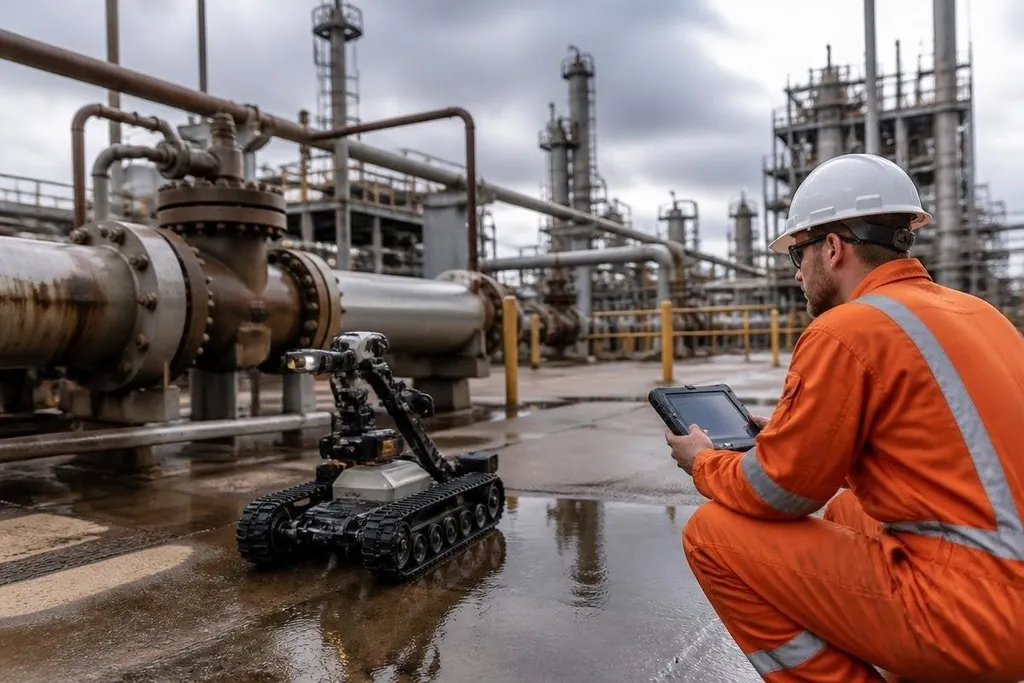
Oil and gas robots will first take on inspection work in places that are hot, toxic, underwater, or difficult for people to reach. Full autonomy will come later, because a robot must do more than move through a site: it must spot a fault, judge its severity, and trigger the right response.
- Cameras and sensors will handle more routine checks.
- Remote operation will remain useful when conditions change.
Where robots fit first
Inspection is a clear starting point because the task already depends on repeated measurements. A robot can carry cameras, thermal sensors, gas detectors, or ultrasonic equipment while an operator reviews the results from a safer location.
That work can take place around storage tanks, pipelines, processing equipment, offshore structures, and confined spaces. The robot does not need to make every decision alone. It needs to collect useful evidence without putting a person beside a leak, fire risk, unstable structure, or moving machine.
Ground robots can inspect floors, pipe runs, and equipment inside industrial sites. Small tracked machines may suit narrow routes, while drones can check tall structures and offshore equipment without scaffolding. Underwater robots can inspect parts of platforms, pipelines, and other structures below the surface.
Each setting creates a different engineering problem. Dust can block cameras, low light can reduce image quality, magnetic materials can affect navigation, and water can damage electronics when sealing fails. A robot that works inside a clean test area may need different sensors and protection at an operating facility.
Autonomy will grow in steps
The first useful systems will likely follow fixed routes, stop at set inspection points, and send data to a human. Software can flag an unusual temperature or a change in a surface, but an operator may still decide whether the finding needs repair.
That division of work matters. A false alarm can waste a team’s time, while a missed defect can damage equipment or interrupt production. The software must show the image, sensor reading, location, and earlier inspection record behind each alert so a person can check the result.
Over time, robots may handle more of the route planning and repeat checks without direct control. They could return to the same equipment, compare new readings with older ones, and ask for help when a result falls outside the expected range. The open question is how well these systems handle changes that were absent from their training data.
Maintenance is the hard part
A robot used in oil and gas work needs more than sensors and software. It needs a charging plan, spare parts, cleaning procedures, secure communications, and a way to recover it when a wheel, motor, or seal fails.
Operators also need to connect robot data with existing maintenance systems. A useful inspection finding should create a clear work order, point to the affected asset, and keep the original image or sensor record. If the data stays in a separate dashboard, staff may still rely on manual checks.
Safety rules add another layer. A machine working near fuel, gas, pressure, or heavy equipment must meet site requirements for electrical safety, movement, emergency stops, and communications. The correct design will vary by location, so one robot will not fit every facility.
A robot that passes a lab test may still fail near live process equipment. For a buyer, oil and gas robotics reports should name the site, task, test date, and measured result. Those details separate a working trial from a claim that still needs proof.
What remains unproven
Robots can collect data in dangerous places, but that does not mean they can manage an entire facility without people. They may struggle with blocked routes, changing weather, poor communications, unusual damage, and tasks that need a tool rather than a camera.
The business case also depends on the full operating cost. A buyer must count the robot, sensors, software, training, site changes, maintenance, and the staff who review its findings. A lower inspection risk may matter more than fewer workers on a route, but the numbers still need checking for each site.
I'd buy an inspection robot for a defined route before buying a system promised to run a whole facility alone. The narrow job gives the operator a clear test: does the robot find useful faults, return reliable data, and keep working after normal site wear?
A practical buying checklist
Before choosing a system, check these points:
- Name the route: specify the equipment, distance, access points, and inspection task.
- Set the evidence standard: decide which images, readings, and location data a human must receive.
- Plan recovery: confirm how staff retrieve the robot after a motor, battery, link, or sensor failure.
- Check site rules: review electrical safety, gas exposure, wireless access, emergency stops, and restricted zones.
- Price the full service: include training, spare parts, software, cleaning, data storage, and human review.
The next step for oil and gas robots is practical rather than dramatic: prove one inspection route, compare its findings with human checks, and expand only when the records show that the system works.